
Aldi picking app
Building a Picking app
A main stay of the supermarket experience is the ability to shop online and have your groceries delivered to your door. Simple, but what does that look like from the supermarkets perspective? How do we empower our in-store teams to be able to 'pick' the customers shopping in a timely manner without adding lots of extra pressure to the teams working day?
Project overview
As a leading UK grocery retailer, the ability to deliver shopping directly to customers’ doors is a significant advantage. An app that enables in-store colleagues to pick and deliver orders helps seamlessly connect our physical stores with digital shopping experiences. It provides customers with greater convenience and speed, while making the most of existing store inventory and the expertise of our colleagues.
For the business, this approach improves order accuracy, increases fulfilment flexibility, and enhances customer satisfaction. It also maximises productivity by allowing each location to operate as a local fulfilment hub.
While home delivery is not new and has been offered by many retailers for years, moving to a more efficient and refined model, operating directly from dedicated fulfilment hubs rather than traditional shop floors, creates a more streamlined and scalable process. In effect, it brings an “Amazon-style” level of efficiency to grocery fulfilment, while retaining the trust and familiarity of a local retailer. How do we make this prcess smoother and scalable so that it works the same for in-store and fulfilment hubs?
Research
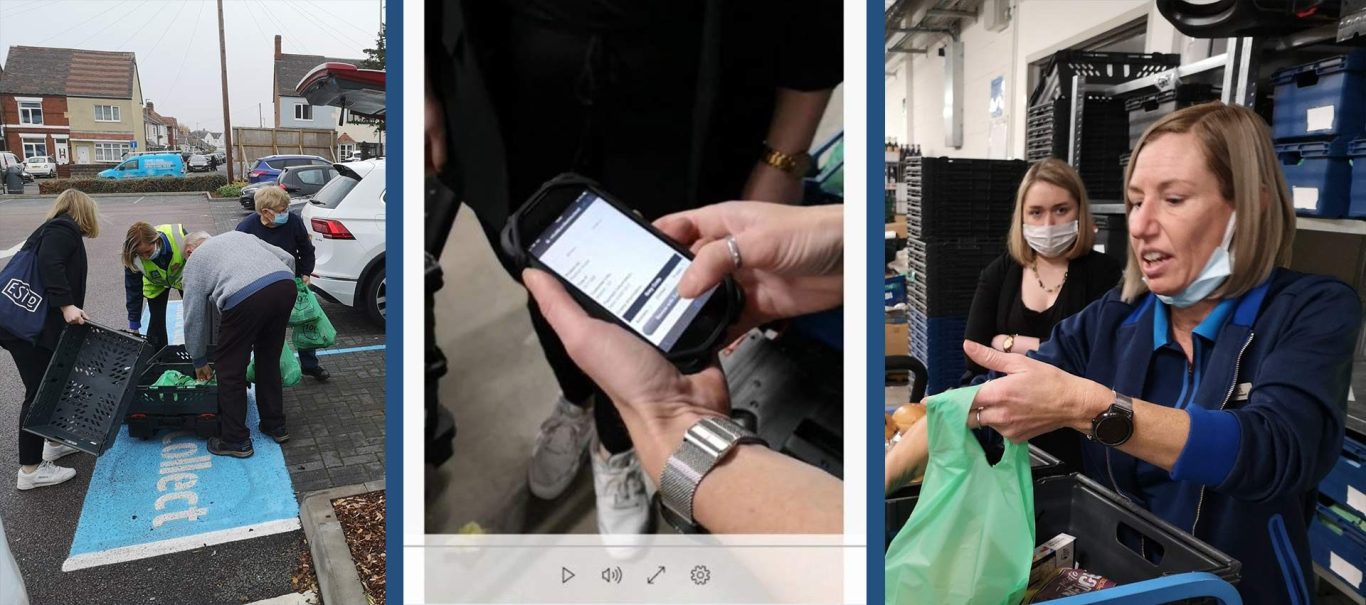
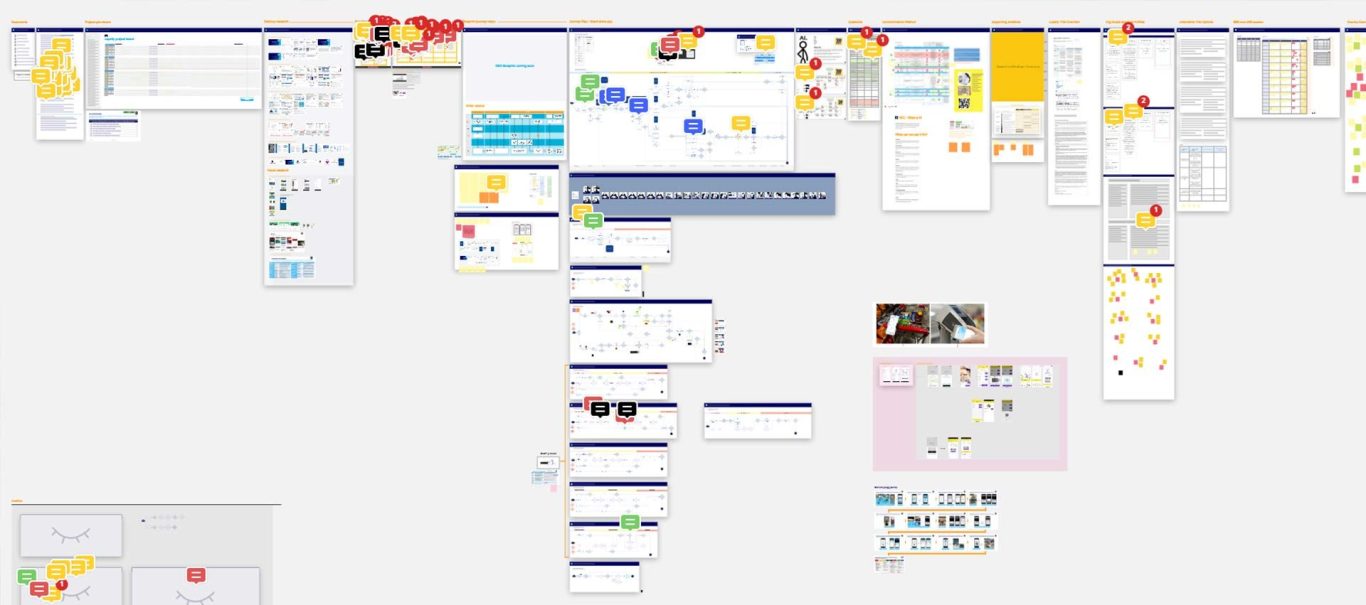
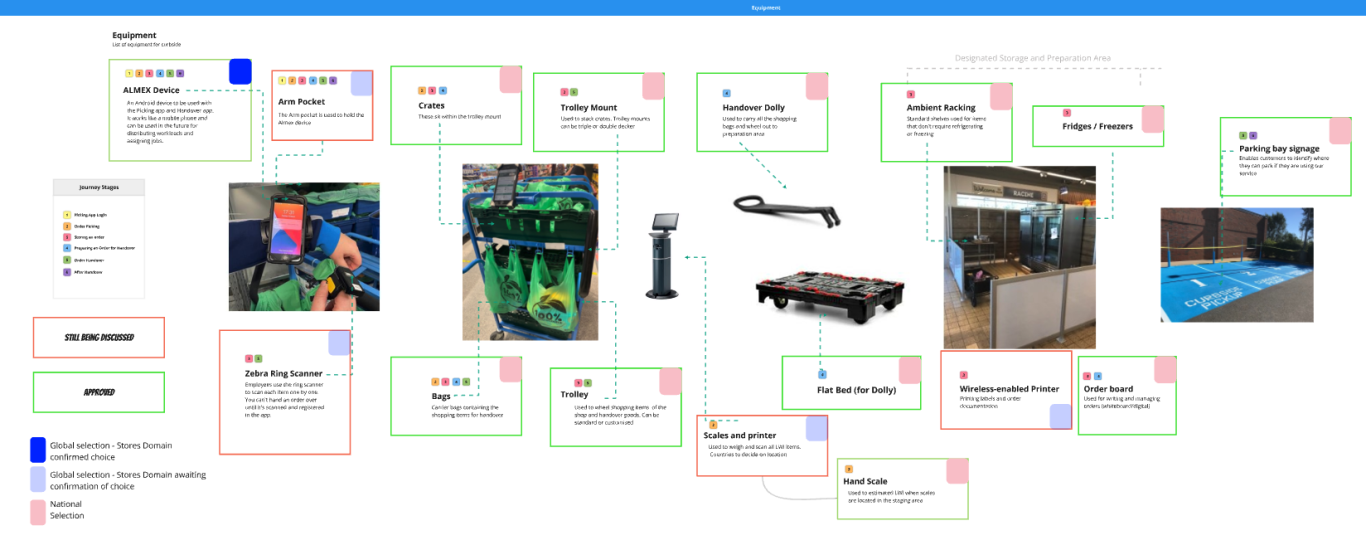
With access to a wide network of stores and close collaboration with in-store colleagues, I visited local Aldi locations and spent time with store teams to understand the current challenges they experience with the picking app in use today. I also completed a full pick myself to gain first-hand insight into the end-to-end process, including operational pressures, time constraints, app functionality, user interface, and in-flow interactions.
Gaining direct, real-world experience of the process being improved is invaluable and relatively uncommon. This hands-on approach provided practical insight that could not be achieved through observation or second-hand feedback alone.
This process also included:
- Benchmarking and review
- Onsite visits and test runs with live cases
- User interviews, both moderated and unmoderated
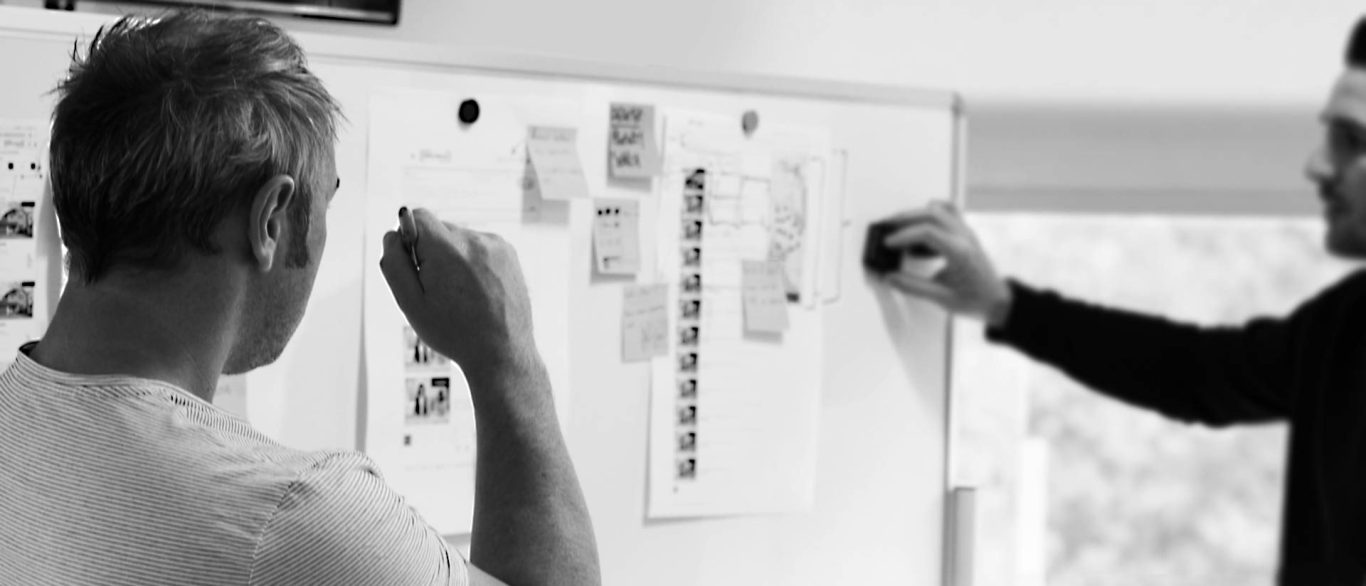
- Using team members to actively test sketches and prototypes
- focus groups on 'what would be great if'
Key focus areas
So we want to create a more effective tool to help our colleagues, but more-over, create something that also feels like an Aldi product that could easily scale to include tracking and other customer friendly tools.
Consistency at scale
Rather than simply restyling the app, this approach focuses on creating consistent, reliable interactions across the picking experience. It enables clearer information sharing and ensures colleagues have a familiar, dependable workflow regardless of store or order type.
Efficiency and speed
Standardised components and patterns reduce both design and development effort, helping teams deliver improvements faster while avoiding duplicated work. This translates directly into quicker iteration and more responsive updates for colleagues on the shop floor.
Improved collaboration
A shared system creates a common language between product, design, and engineering teams, reducing misalignment and ensuring that changes to the picking app are clearly understood and consistently implemented.
Higher quality and usability
Components are tested and refined in real-world picking scenarios, with accessibility and usability built in from the start. This leads to a smoother, more intuitive experience for colleagues working under time pressure.
Scalability and flexibility
The app can more easily evolve to support new store formats, fulfilment models, or operational changes, without requiring large-scale rework as the business grows.
Stronger brand alignment
The picking experience reflects the retailer’s brand values while still allowing teams to adapt and innovate within clear, well-defined guidelines.
Simplified maintenance
Updates can be managed centrally and rolled out consistently across stores, reducing both technical and design debt and ensuring colleagues always have access to the latest improvements.
My role
My main roles for the development of the design system started by trying to understand the question - What is the best way to unify Shawbrook's product catalogue and create a smooth way of creating a visual language that is easily recognisable as Shawbrook. My other key roles were:
- Lead researcher (Moderated and unmoderated)
- Product designer
- Project management
- Team storyteller
Timeline
12 weeks from initial understanding of the brief to execution.
Problem
The problem to be solved
The existing picking app presents several usability and scalability challenges. It is not intuitive to use and has limited flexibility, making it difficult to adapt or update as operational needs evolve. The app was originally designed to support a narrow, specific workflow, which restricts its ability to handle common real-world scenarios such as product substitutions.
As a result, changes are complex to implement and the overall experience is harder for colleagues to understand, particularly under time pressure. The current user interface lacks clarity, which further increases friction and reduces efficiency during the picking process.
Why it matters
Speed is critical in the picking process, and any need to interpret a complex user interface or search for suitable substitutions when products are unavailable adds unnecessary pressure for in-store colleagues. Providing a clear, intuitive experience allows tasks to be completed more efficiently and with greater confidence, helping colleagues perform at their best even in high-pressure environments.
Approach
Understanding the existing space
- Research: What is the current app not doing and what kind of pain is being experienced on a daily basis
- In store visits to witness and take part in 'picking'
- Assimilate all understanding and how it affects the current app (baselining)
- basic design of new approach and the how it differs from the existing flow (Auditing)
- Communicate progress, decisions, and upcoming changes clearly and consistently across teams.
- Provide clear documentation and usage guidance to support adoption by internal teams and third-party partners.
- Actively promote change and encourage adoption through enablement, advocacy, and feedback loops.
- Establish governance and ownership to manage updates, contributions, and ongoing maintenance.
- Continuously evolve the system based on real-world usage, feedback, and product needs.
- Key decisions, constraints, or principles you followed
Solution
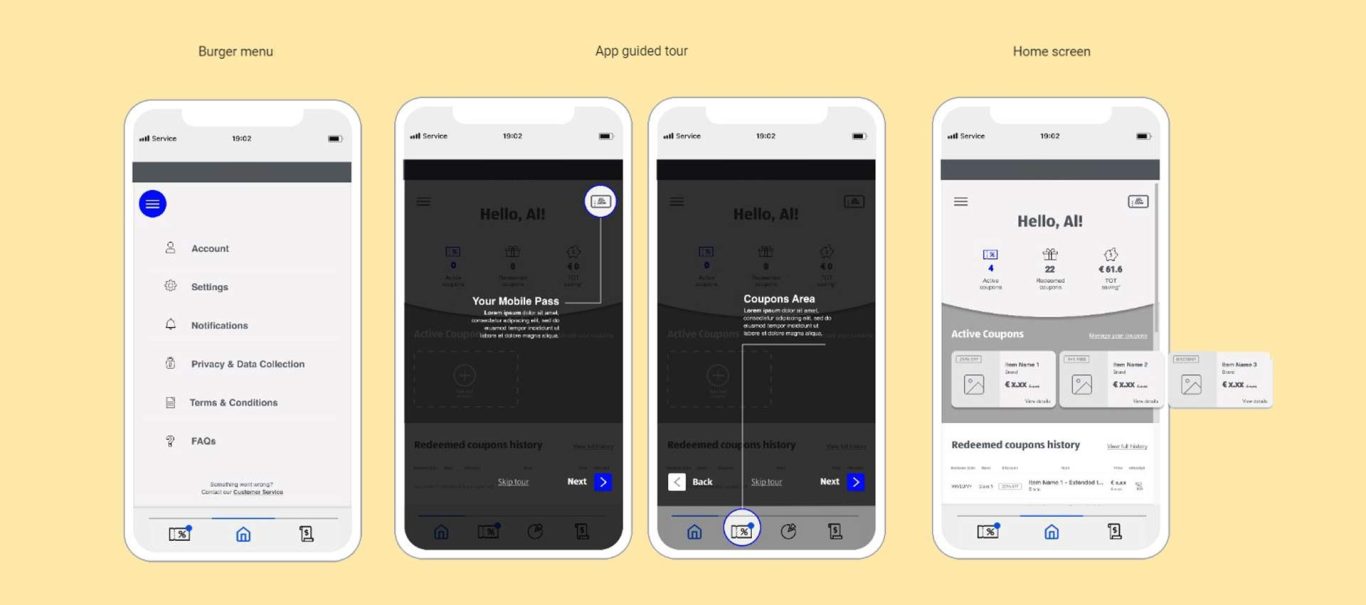
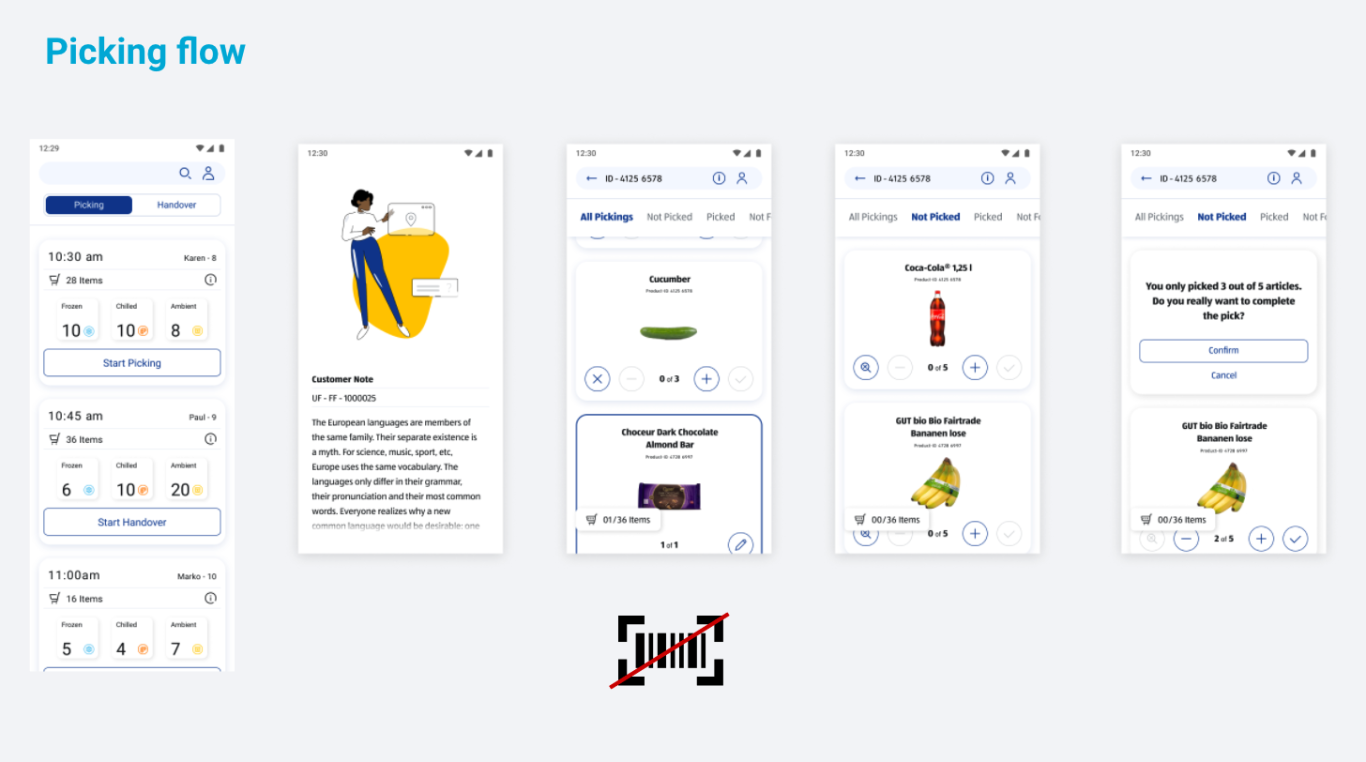
new app was delivered to refresh the core picking journey and scale the experience to support additional functionality, including improved data capture, smoother product substitutions, and clearer instructions throughout the process. The app also introduced a task management feature, enabling in-store colleagues to adjust picks and group items more effectively for example, scheduling frozen items to be picked last to prevent spoilage.
The user interface was significantly overhauled to ensure information could be understood at a glance, reducing cognitive load and supporting faster, more confident decision-making during picks.
Impact
The app update not only increase picking speed but also helped increase in store team quality of like.
- In high-performing stores, the picking app has saved an average of 137 minutes per week.
- Enhanced data capture provides deeper insight into customer buying habits, enabling more accurate product recommendations and supporting increased basket sizes.
- The app is designed to scale beyond individual stores, allowing fulfilment from dedicated hubs and supporting features such as delivery tracking via integrated mapping.